Oakberry Floripa Half 2026: 31km challenge and sub-2 in 1h55'26
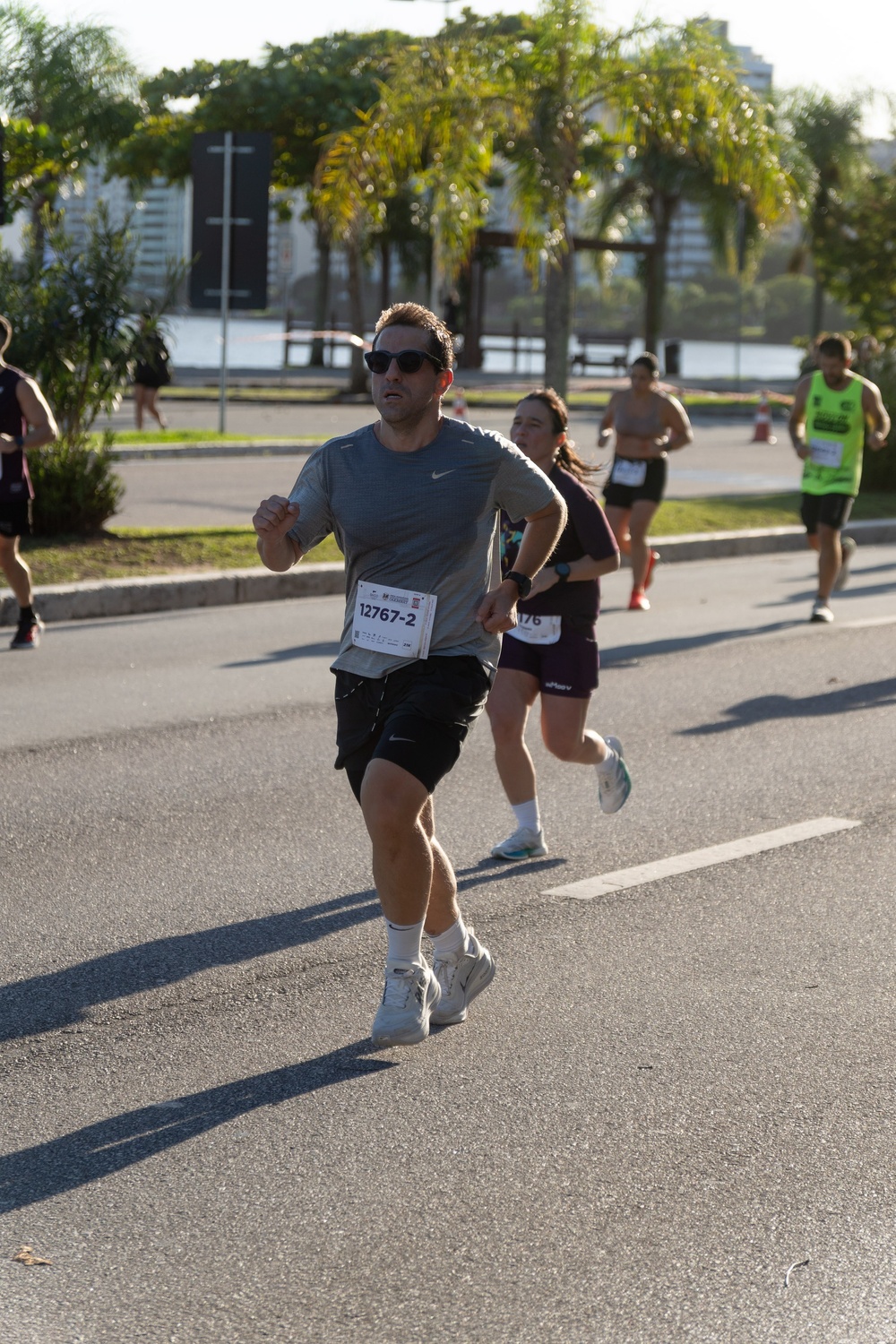
Mandala stage 2 in the books, with double the load. 1h55'26" on the chip for the 21k, with Saturday's 10k still in my legs and a southerly wind hammering the Beira-Mar the whole way through. Sub-2 nailed with 4'34" to spare, after the eight seconds that got away in BC a week earlier.
This is the post-race review of the weekend, focused on Sunday. The pre-race side (Friday's last-minute call to switch to the challenge, the kit swap for R$50, and Saturday's 10k) lives in the decision report and the race preview (both currently in Portuguese).
What follows: the 21k under southerly wind with the Hercílio Luz Bridge lit purple for its 100-year mark, the head-to-head against BC, recovery between the two races, the shoe call, and the second stage of the 2026 mandala closed with the exclusive 31km challenge medal.
Neste post
The full weekend also went up on the channel:

How Sunday started
The week between BC and Floripa opened with a clean plan: attack sub-2 only on Sunday’s 21k, polish on Friday, nothing else. Friday afternoon, the 31km challenge medal stamped with the Hercílio Luz Bridge and the “100” of the centennial outweighed the original plan. I skipped the polish, swapped the kit for R$50 net, Samuka signed off, and Rafael Caviquioli adjusted the weekend’s carb load.
The full story of the decision, the kit swap, and Saturday’s 10k (chip 00:58:36, 5:51 pace, HR 142, 755th overall / 147th M30-34) is in the last-minute decision report. This piece focuses on Sunday.
Sunday: 21k under southerly wind with the Hercílio Luz Bridge lit purple
Start at 9:08 AM, opposite scene from Saturday. Clear sky, low sun over the mainland hills, dry asphalt, 16°C with a wind chill of 12°C, southerly wind locked in.
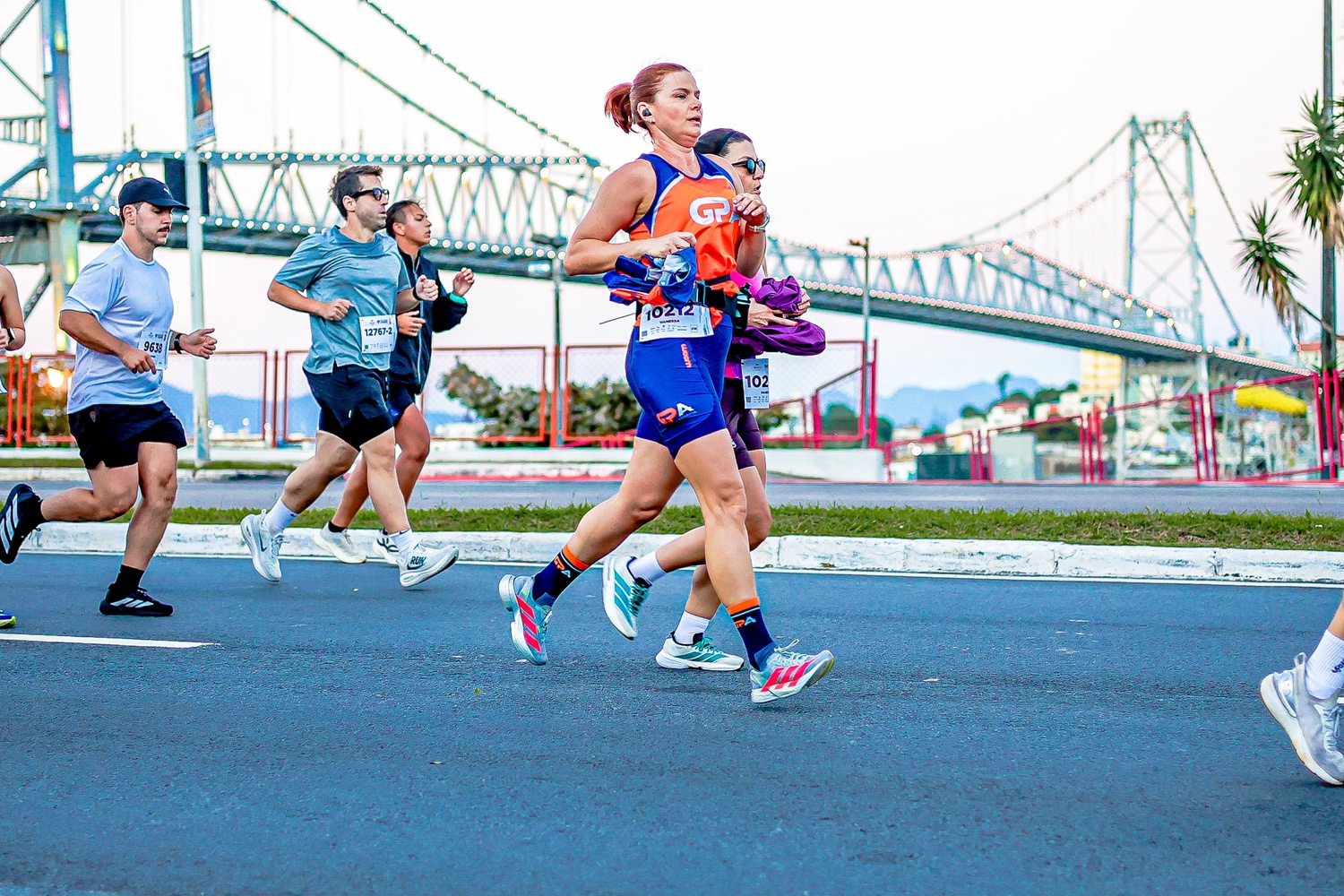
And the Hercílio Luz Bridge lit purple in the centennial scheme, glowing across the bay. The 21k field ran toward it on the first Beira-Mar straightaway with the bridge as backdrop, lampposts still on in the early-morning dark:
The timing was cinematic. The bridge was inaugurated on May 13, 1926 and turns 100 exactly ten days after this Sunday. The whole month of May has commemorative programming in Florianópolis (Bridge Hug, vintage car exhibition, “Travessias” contemporary dance, Joss Stone concert, fireworks), and the half marathon opened the sports calendar of that window. The 31km challenge medal stamps the bridge with the “100” underneath. Nothing accidental about it. The weekend was designed inside the centennial turn.
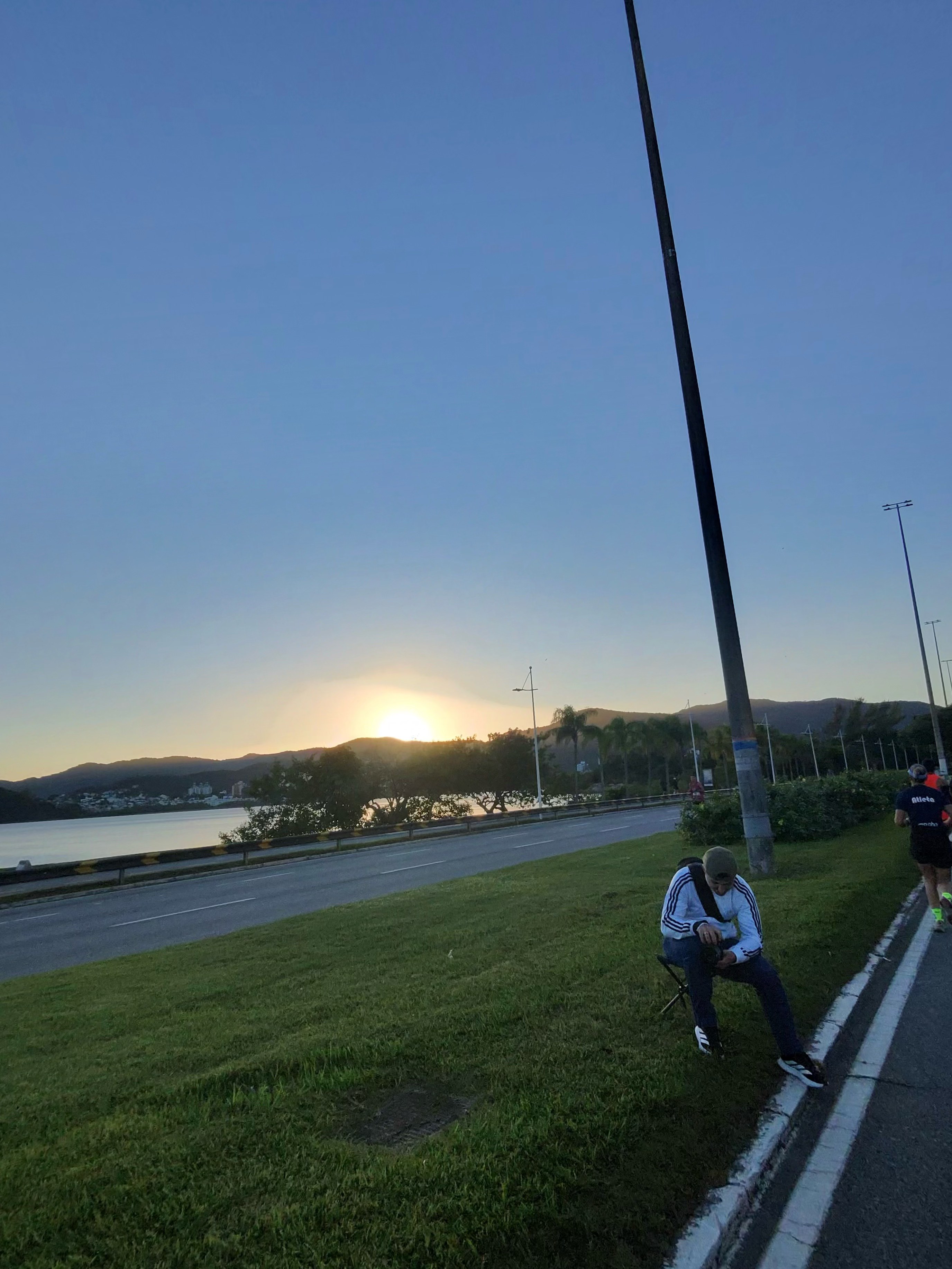
Then the sun came up over the mainland. No rain in the way (unlike BC, where it rose hidden behind clouds), reflecting on the calm North Bay:
The course is widely considered one of the fastest in Brazil, with just under 50 meters of total elevation gain in the official altimetry and a nearly flat layout looping the Beira-Mar Norte, passing close to the Elevado Dias Velho and UFSC. Walace Evangelista set a new course record (1h03’39”) and Vivian Kiplagati won the women’s race in 1h13’32”, also a course record. The race carries a CBAt Gold Label and a World Athletics Road Race Label, which means times count toward the world ranking.
The southerly wind was the day’s antagonist. It came on the way out, on the way back, and at the finish. For anyone running on the Beira-Mar Norte, southerly wind is the one that costs the most: it’s born off the cold ocean, crosses the Hercílio Luz Bridge, and hits anyone heading south from the Trapiche head-on. Felt it in the arms, on the face, on the pace. It didn’t kill the race (no kilometer blew up because of it), but it adds up across the whole effort. Vivian Kiplagati commented at the finish that the wind made things tricky. Walace, on the opposite end: “the race was perfect, great organization, and the weather helped me today.” Elites at 3:00 pace feel the wind differently than we do at 5:30.
The plan came in faster than BC
Samuka kept the BC plan structure: blocks with pace windows, projected negative split toward the end. The difference was attacking sub-2 with breathing room rather than scraping it. Margin he accepted after BC’s outcome and after the polish-week long run, which had shown a lighter heart rate at the same target pace.
The order: held until km 14, open up from km 15 onward. I nudged a bit earlier (km 14 at 5:27), but the floodgate properly opened at km 15.
| KM | Pace | HR | KM | Pace | HR |
|---|---|---|---|---|---|
| 1 | 5:47 | 132 | 12 | 5:35 | 141 |
| 2 | 5:48 | 138 | 13 | 5:37 | 142 |
| 3 | 5:51 | 136 | 14 | 5:27 | 144 |
| 4 | 5:52 | 136 | 15 | 5:02 | 145 |
| 5 | 5:37 | 137 | 16 | 4:54 | 149 |
| 6 | 5:40 | 137 | 17 | 4:49 | 152 |
| 7 | 5:33 | 141 | 18 | 4:53 | 153 |
| 8 | 5:45 | 140 | 19 | 4:44 | 156 |
| 9 | 5:36 | 140 | 20 | 4:42 | 158 |
| 10 | 5:34 | 140 | 21 | 4:36 | 165 |
| 11 | 5:34 | 140 |
The last 7 km averaged 4:48 min/km. Km 21 closed at 4:36 with a max HR of 165, finish-arena sprint.
Fear of cracking held the floodgate until km 14. I had Saturday’s 10k still in the legs and the awareness that opening up too early into a southerly wind could turn into a nightmare in the final 5. In hindsight, I could have opened at km 12. The 4’34” of room under sub-2 shows the engine had more in it. Lesson for next time: trust the data sooner when mid-race splits show heart rate below projection.
Official 21k result:
| Metric | Value |
|---|---|
| Chip time | 1h55’26” |
| Average pace | 5:29 min/km |
| Overall placing | 1613th |
| M40-44 placing | 231st |
Garmin:
| Metric | Value |
|---|---|
| Total time | 1h54’05” |
| Distance | 21.09 km |
| Avg / max HR | 143 / 166 |
| Avg cadence | 168 spm |
| Elevation gain | 69 m |
| Calories | 1589 |
Oakberry vs BC, side by side
The most useful read of the numbers is the head-to-head with the BC Half, run seven days earlier:
| Metric | BC (Apr 26) | Oakberry (May 3) | Δ |
|---|---|---|---|
| Chip time | 2h00’08” | 1h55’26” | -4’42” |
| Average pace | 5:43 | 5:29 | -0:14 |
| Avg HR | 151 | 143 | -8 bpm |
| Max HR | 174 | 166 | -8 |
| Cadence | 166 spm | 168 spm | +2 |
| Elevation gain | 139 m | 69 m | -70 m |
Almost five minutes faster, with average heart rate 8 bpm lower, higher cadence, and a 10k already in the legs. The Oakberry course is flatter (half BC’s elevation), and that explains part of the gap, but not all of it. The rest is race fitness rising: body responding better to the same effort, training continuity consolidated, and cleaner heart rate management.
The recovery that paid off on Sunday
The window between Saturday’s 10k and Sunday’s 21k start was 23 hours (9:48 AM → 9:08 AM). The decision report covers Caviquioli’s protocol and Saturday afternoon’s recovery in full. Here I’ll log only what made the difference on Sunday: localized stiffness in the calf that didn’t clear in the first compression-boot session (morning) needed a second session in the afternoon, this one focused on that area. It cleared. Without that second session, the km 16 to 21 stretch under 5:00 pace probably doesn’t happen. The compression boot deserves its own gear review and will land in a separate post soon.
The other piece that mattered: hotel 700m from Praça Portugal. Waking up on race day without driving, no traffic, walking to the start with shoes already on, is a recovery variable as much as sleep. For anyone running back-to-back race days, that’s not a luxury, it’s part of the plan.
Shoes: Megablast for 10k, Vomero Plus for 21k
Opposite call to BC. The week before I’d worn Vomero Plus because of the rain and because my body knew the ride. Here I split the pair across the two days:
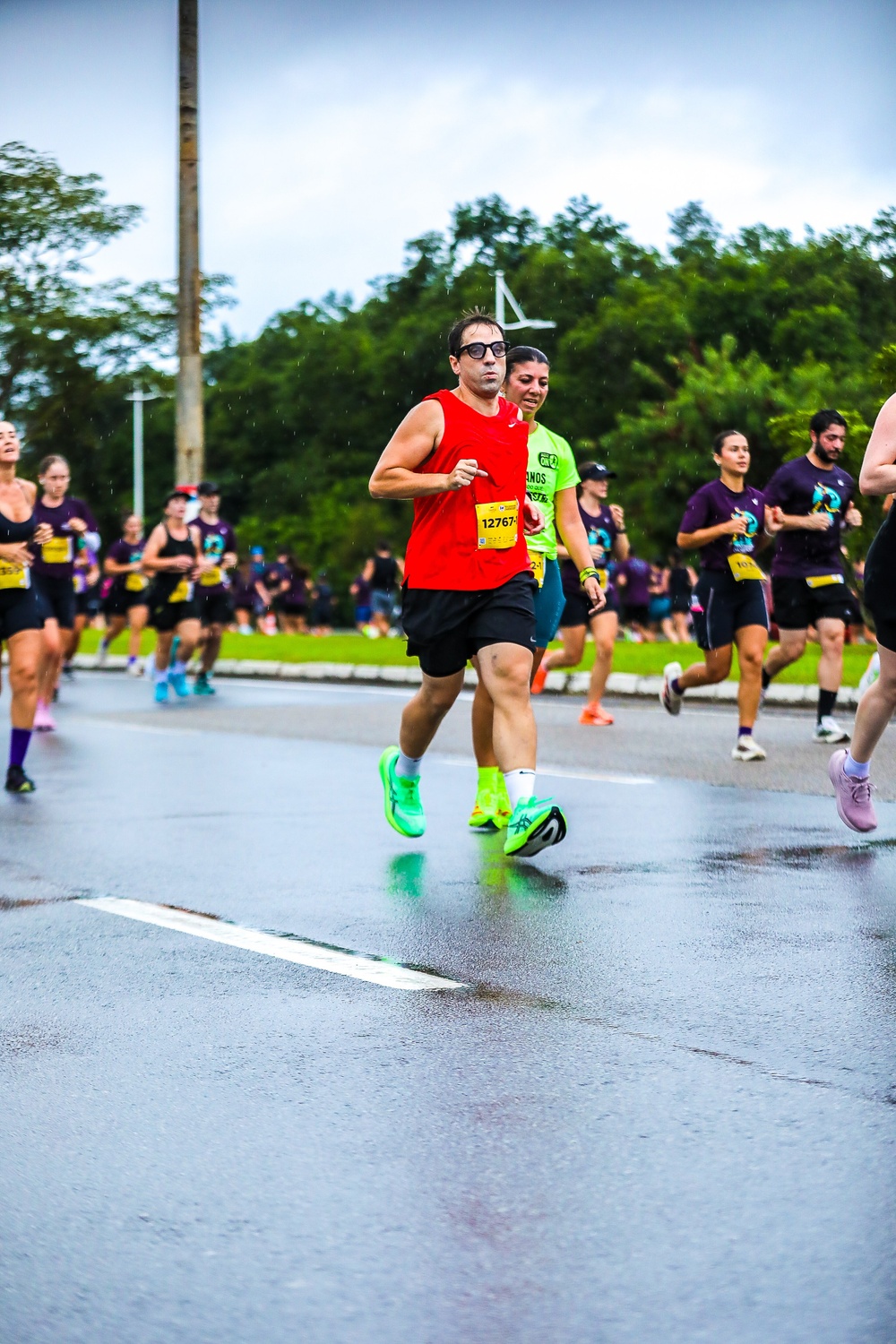
Saturday, 10k: fluorescent green Asics Megablast. This was the shoe that had been left out in BC. It was also the chance to test it in a short race before committing it to a 21k. It handled the rain well, stabilized cleanly on wet pavement, transition was clean. Came out as my new half-marathon shoe. From here on it’s the one for 21k races.
Sunday, 21k: Nike Vomero Plus. Stays as the long-run and continuous-race shoe up to the Megablast handover. Soft, well-cushioned, with consistent energy return in the closing kilometers. For anyone over 80 kg like me, the Vomero Plus delivers the kind of protection lighter models don’t give once fatigue is accumulated. Thesis reinforced this Sunday: 21.09 km with a 10k already in the legs, no discomfort, no blister, no chafing. Continues to be the recommendation for heavier runners who want a long-race shoe that doesn’t punish the legs in the final stretch.
The handover (Megablast for races, Vomero for long runs and heavy training) is the takeaway from Floripa for the rest of the 2026 mandala.
Floripa saved for next time
Two days devoured by the two races. Saturday closed in concentrated recovery (boot, food, rest). Sunday wrapped late because of the expo, the 31km in the legs, and the natural energy crash after a half marathon.
Result: the Floripa guide I wrote before the race ended up serving only as a map for the next visit. Lagoa da Conceição, Ribeirão da Ilha, Santo Antônio de Lisboa, Joaquina, none of that fit into the weekend. The guide’s rule held up: for a runner heading to a race, priority is proximity to the start line and tourism fits better in a longer trip. For a 31km challenge, that’s doubly true.
The island stays as an open visit goal. In August I’m back for the Floripa International Marathon (Aug 29), also a mandala stage, and this time the plan is to arrive earlier and tackle the tourist itinerary that’s still waiting.
Organization: shopping mall expo and a soft critique
The 21st edition delivered a structure to match the event’s size. 30,000 people circulating through the Beira-Mar Norte across the two days, 18 countries represented, all 26 Brazilian states and the Federal District. It was the biggest edition in the race’s history and demanded heavy logistics.
Kit pickup at Beiramar Shopping was the first heavy lift. Day 1 fell on a national holiday and the line was significant, but the organization had 20 to 30 attendants working at once, and the line moved fast. The expo afterward was complete: sponsor stands, rest area, kit handed over without friction.
On the course, the support was flawless. Hydration every 1.5 to 2 km, isotonic at the right points, gel/carb at least once during the 21k, portable toilets without lines when I needed them. The initiative of running medics carrying defibrillators distributed along the route deserves a callout: it makes a real difference for fast response to cardiac arrest, and mass races are starting to adopt it as standard. Good call by Sportsland.
Soft critique for the next edition: some stretches of the course had only one lane open for running, which bottlenecked at specific points, mainly in the early kilometers of the 21k before the field naturally spread out. With 6,000 runners in the 21k, keeping at least two lanes during the warm-up stretch would help start-line flow. Worth the organization looking at for 2027.
Overall, an event execution worthy of a CBAt Gold Label and World Athletics Label. The bar was high for a record-setting edition, and it was met.
Mandala 2 of 5 in the books
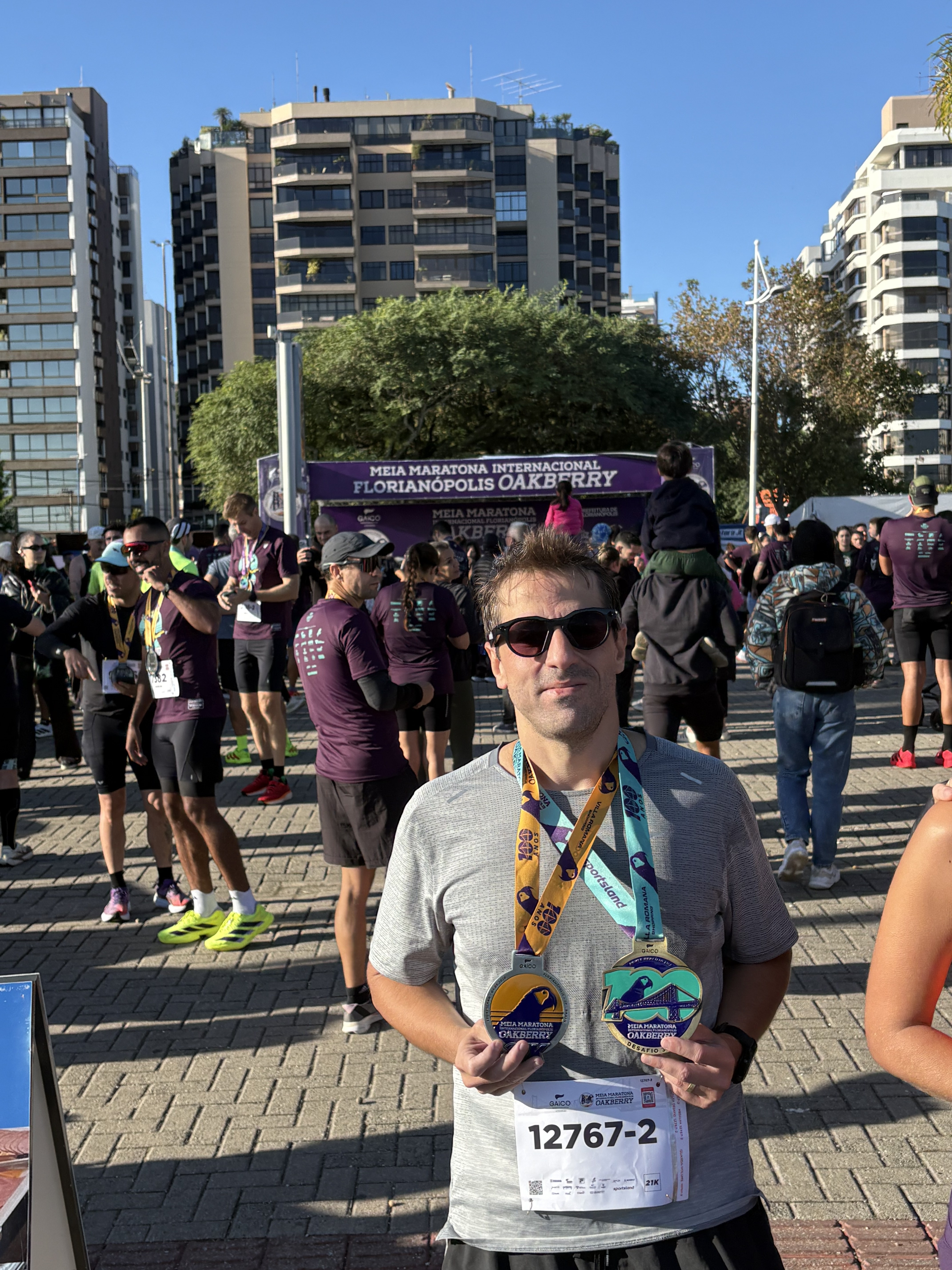
Two stages closed. Three to go to complete the 2026 mandala.
| Date | Stage | City | Distance | Status |
|---|---|---|---|---|
| Apr 26 | BC Half | Balneário Camboriú | 21k | ✓ 2h00’08” |
| May 3 | Oakberry Floripa Half | Florianópolis | 21k | ✓ 1h55’26” |
| Aug 2 | Chapecó Half | Chapecó | 21k | upcoming |
| Aug 29 | Floripa International Marathon | Florianópolis | 21k | upcoming |
| Sep 27 | Criciúma Marathon | Criciúma | 21k | upcoming |
Between Oakberry and Chapecó there’s a long gap, with two non-circuit races in between (APAE Brusque on May 24 and Santos Dumont on June 28, both 10k) and the Blumenau International Marathon on July 5, my first ever 42k. The training window into Chapecó allows form to consolidate and sub-2 to be attacked with more room. 1h53 enters as a concrete target.
Sub-2 is off the to-do list. The next level is dropping below it with method.
Sources
- Official results: finisher certificate Sportsland Runking, Meia Maratona Internacional de Florianópolis Oakberry 2026
- Samuka, coaching team responsible for the race plan
- Rafael Caviquioli, sports nutritionist responsible for the carb load and gel protocol
- Mania de Corrida: record-setting edition coverage- De Olho na Ilha: Vivian Kiplagati and Walace Evangelista break records- Olympics.com: course details and World Athletics Gold Label- SECOM SC: Hercílio Luz Bridge centennial program- Oakberry Floripa Half 2026 preview, with course, prizes, kit and weather- Last-minute decision report for the 31km challenge, published Saturday night with the pre-race side- BC Half 2026 race report, first mandala stage and basis for comparison
- Floripa guide for the Oakberry Half- 2026 Circuito Catarinense calendar Images and videos:
- Hero (sprint at the 21k finish): Photo Foco Radical
- Field in the rain, green Megablast, daytime Hercílio Luz, finish-line sprint: Photos Foco Radical (purchased)
- Hercílio Luz lit purple (video) and sunrise over the bay: personal captures with Oakley Meta during the race
- 31km challenge medals: personal post-race photo
Follow Tênis e Milhas
Next race previews, training and travel land here first: